Field ReclamationFor Brushed-In Pasture
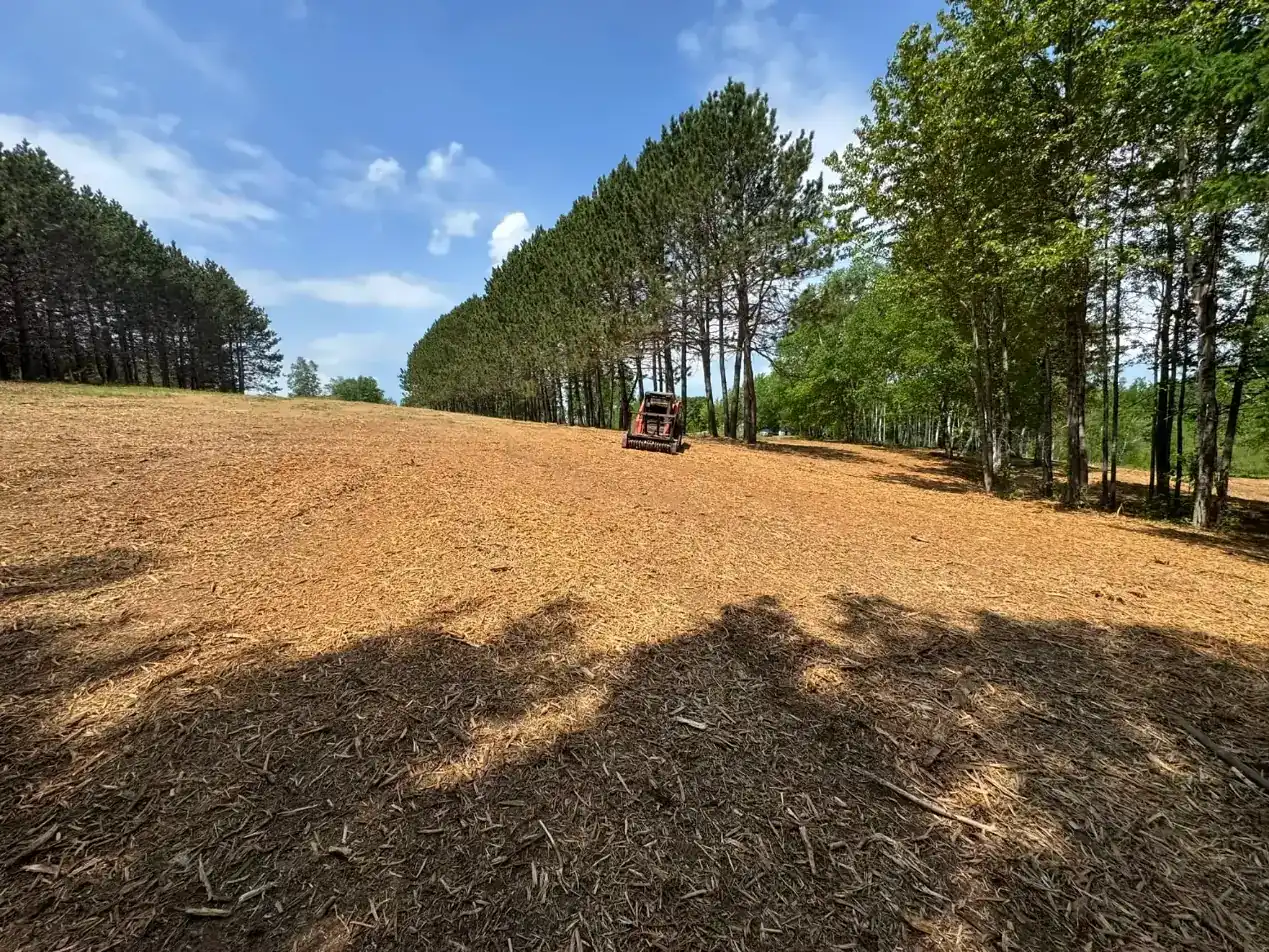
Field reclamation and pasture reclamation in northeast Minnesota. We mulch the brush and young popple out of old hay fields so they can be fields again.
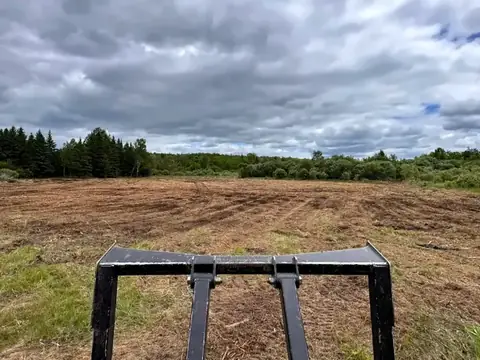
It Was A Field Once. It Can Be Again.
Every county up here has fields that are halfway back to woods. The cattle left or the haying stopped. Popple suckers crept out from the tree line. Willow and alder took the low end. Now the old pasture is a patchwork of grass and brush too thick to mow. Field reclamation takes that woody growth back out before the field is lost for good.
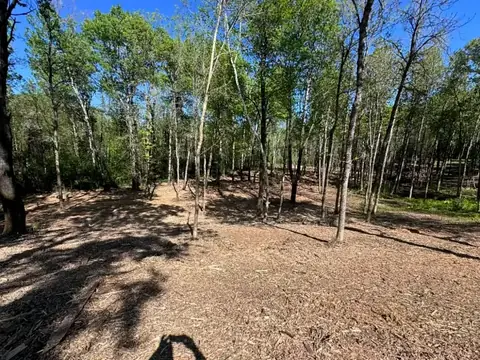
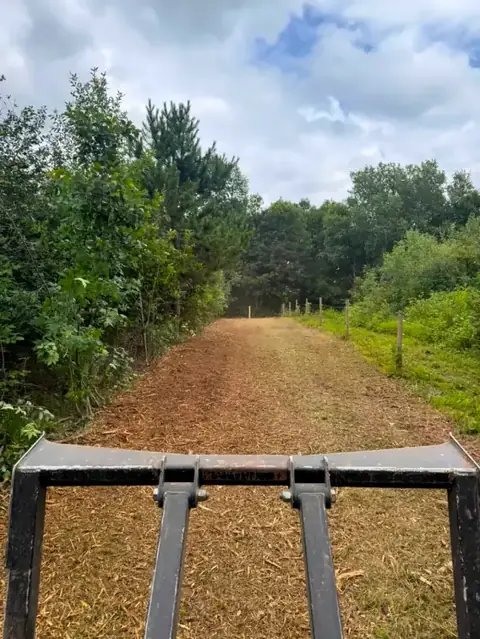
We do pasture reclamation with a tracked loader and a mulching head. The machine grinds the popple, willow and brush into chips and leaves the sod and topsoil alone. Nothing is dozed into the corners. Nothing is burned. Once the woody growth is down, a tractor and mower can keep the field open the way it used to be kept.
- Popple, willow and brush mulched out
- Sod and topsoil left in place
- Field edges pushed back to the old line
- Ground a tractor can mow again
What To Know About Field Reclamation
How fields get lost
It happens slowly, then all at once. Aspen, which most folks here call popple, spreads by root. One tree on the edge sends up shoots well out into the grass. Skip mowing a couple of seasons and those shoots are too stout for a sickle bar. From there the field fills in from the edges and from every wet spot.
Past a certain point a farm mower can't win. The stems are too thick, and running over them wrecks equipment. That is where a mulcher makes sense. It handles the brush, saplings and small trees a mower can't, and it leaves ground a mower can manage afterward. The method is the same forestry mulching we use on every other kind of job.
What we do to bring a field back
First we walk it with you and find the old field edge. Old fence, rock piles and the change from young trees to old ones usually show where it was. Then Calvin works the field in passes and grinds the woody growth down. Islands of brush in the middle go. Edges get pushed back to the original line, or wherever you want it.
Fence rows around the field often need the same treatment. See fence and property line clearing. If part of the field has gone all the way to thick young woods, that portion is closer to land clearing, and we can handle it on the same trip. We do not till, pick rock, lime or seed. That part is yours or your farmer's.
What drives the cost of reclaiming a field
The main question is how far gone it is. A field with scattered clumps of willow is one kind of job. A field that is wall-to-wall popple taller than the cab is another one entirely. Stem count and stem size set the pace. Open grass between brush patches adds little, because the machine just drives across it to the next patch.
Wet ground is the other big one. Low fields may need dry weather or frost before the machine can work them without sinking in. Rock piles, old machinery and downed wire hidden in the tall grass slow things down too. We cover all of it under what drives the cost. The estimate is free, and it starts with walking the field.
Winter vs summer for field work
Dry fields can be done in any season. Late summer and fall are good because the ground is firm and you can see the brush lines. Low, wet fields are often better in winter. Frost lets the tracks stay on top where summer mud would not. We work all year, so the calendar can fit the field instead of the other way around.
Think about what comes next when you pick a time. If you plan to mow, graze or seed the following season, clearing in fall or winter gives the mulch time to settle. If livestock are on the pasture, we plan around moving them. We reclaim fields in St. Louis, Carlton, Pine, Aitkin, Itasca and Lake counties. Towns are listed on our service area page.
Simple From First Call to Last Pass
Reach Out
Call, text or send the form and tell us where the land is and what you want done.
Walk the Land
We look at the ground, the growth and what you want to keep.
Get an Estimate
You get a straight number and a plan for the work.
We Mulch It
The machine rolls in and your land opens up.
Field Reclamation Questions
Can an overgrown field be made into pasture again?
In most cases, yes. If the growth is brush, saplings and small trees, we can mulch it off and leave the sod and soil in place. Reseeding or other field work after that is up to you. We handle the clearing.
Will popple come back after it is mulched?
Expect some. Aspen sprouts from its roots, and cutting it tends to trigger new suckers. They come up thin and soft, so a mower or grazing animals can keep them down. Stay on it for the first few seasons.
Can I mow or hay the field after you mulch it?
Mowing with a brush mower is usually fine once the mulch has settled. For haying, check the field first. Chips and low stubs can be rough on hay equipment until they break down. Walk it with whoever cuts your hay.
How overgrown is too overgrown to reclaim?
If it is still brush, saplings and small trees, it can be reclaimed by mulching. Once a field has grown into real timber, it needs a logger. Many fields are a mix. Send photos or call, and Calvin will tell you which parts fit.
Do you reclaim fields in Carlton and Pine counties?
Yes. We take field and pasture work in Carlton County and Pine County, along with St. Louis, Lake, Aitkin and Itasca counties. Old farm ground turns up in all of them. Call or text (218) 461-7376 and tell us where the field is.
Field Reclamation Near You
We work across St. Louis, Lake, Carlton, Pine, Aitkin and Itasca counties. See the full service area.
Let's Open Up Your Land
Call or text (218) 461-7376 or tell us where the property is and what you want cleared. Calvin walks the land with you before you get an estimate.
- Free estimate after we walk the land
- Acreage, lots, trails and fence lines
- Rather talk now? Call or text (218) 461-7376