
Buckthorn Removalin Minnesota
Buckthorn turns open woods into a wall of brush. Forestry mulching knocks a thicket down fast, but it is only step one. Here is what to expect, including the follow-up no one should skip.
How to Recognise a Buckthorn Thicket
Buckthorn removal in Minnesota usually starts with one question: is that what I have? The easiest clue comes in late fall. After the native trees and shrubs have dropped their leaves, buckthorn is still green. A band of green understory late in the season is a strong sign. In summer, look for a tall shrub or small tree growing in dense clumps, with dark berries on some plants and many stems coming from one base.
Up close, common buckthorn often has a small thorn at the tip of a twig. Cut a stem and the wood shows yellow under the bark and orange toward the center. Glossy buckthorn has shinier leaves and no thorn, and it likes wetter ground. You do not need to be sure of the species. If you are unsure, the DNR has identification help. What matters for clearing is the pattern: a thick, shady layer with little growing under it.
Why It Takes Over the Understory
Buckthorn was brought here as a hedge plant and spread into the woods. It leafs out early and holds its leaves late, so it gets sun that native plants miss. That long season lets it outgrow the shrubs and seedlings around it. Birds eat the berries and drop the seeds along fence lines, trail edges and under perch trees. New plants come up thick, and seed left in the soil keeps sprouting for years afterward.
The result is shade. A mature thicket blocks so much light that young oaks, maples and pines struggle to get started beneath it. Wildflowers and grasses thin out. The ground under the stems is often bare, which leaves the soil open to washing. For a landowner, the practical cost is simple. You cannot walk through it, see through it or hunt through it. Trails close in and the property line disappears.
What Forestry Mulching Does to a Thicket
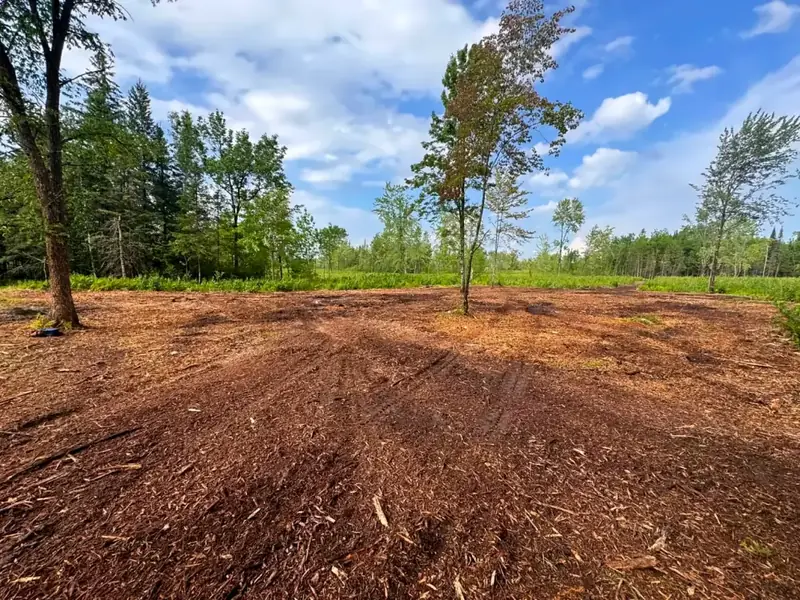
A mulching head is well matched to this kind of growth. Buckthorn is mostly small to medium stems packed close together, and that is what the machine grinds best. The drum takes each clump down to ground level and shreds it into chips. A wall of brush becomes open woods in one pass. Nothing is dragged out and nothing is piled. See forestry mulching for how the method works in general.
The clearing is selective. The operator works around the oaks, maples, pines and other trees you want to keep, and removes the brush between them. That is the difference between underbrush clearing and flattening a woodlot. Buckthorn often follows a line, such as a driveway edge, a back boundary or an old pasture fence. Fence and property line clearing with a mulcher opens those strips without a pile at the end.
The Honest Part: It Resprouts
Mulching does not kill buckthorn. The stump and roots are still alive after the top is ground off, and they send up new shoots, often several from each stump. Seed already in the soil will sprout as well, now that light reaches the ground. Anyone who tells you one pass ends the problem is leaving this out. Without follow-up, a cleared area can grow back into brush within a few seasons.
What mulching gives you is a reset. Tall, woody stems become short, soft regrowth that is far easier to deal with. You can reach every part of the ground. You can see what you have. The mulch layer slows some of the new seedlings. From there the job turns from clearing into upkeep, and upkeep is where buckthorn is won or lost. Plan for that before the machine shows up, not after.
Follow-Up After the Thicket Is Down
There are two common paths. The first is cutting. Mowing or brush cutting the regrowth again and again, season after season, can wear down the roots because the plant never gets to rebuild. It takes patience. Open areas such as old pasture can be kept this way, and field reclamation often ends with regular mowing. The second path is the landowner's own treatment plan for the stumps and sprouts. We do not apply herbicide.
If you want advice on treatment, the DNR and your county are the places to ask. Whatever you choose, decide it early and keep at it. Pull the small seedlings by hand when the soil is soft. Walk the area each fall when buckthorn is the only green thing left and easy to spot. Want the thicket knocked down so you can start? Request a free estimate and Calvin will walk it with you.
The Short Version
- Buckthorn stays green in late fall after native leaves drop.
- Mulching grinds a thicket to ground level in one pass.
- Stumps and roots survive and resprout. Follow-up is required.
- We clear the brush. We do not apply herbicide.
Quick Answers
Does forestry mulching kill buckthorn?
No. It grinds the top growth to the ground, but the stumps and roots live and resprout. Mulching clears the thicket so follow-up is possible. The follow-up is what controls it over time.
Do you treat the stumps?
No. We do not apply herbicide. We clear the thicket, and regrowth can be cut again later. Any chemical treatment is the landowner's choice and responsibility. The DNR can point you to guidance.
When is the best time to clear buckthorn?
Any season works for the clearing itself. Late fall makes buckthorn easy to pick out because it stays green. Winter suits thickets on soft or wet ground. See our winter clearing guide.
Let's Open Up Your Land
Call or text (218) 461-7376 or tell us where the property is and what you want cleared. Calvin walks the land with you before you get an estimate.
- Free estimate after we walk the land
- Acreage, lots, trails and fence lines
- Rather talk now? Call or text (218) 461-7376